


Advancing circular construction: RECONSTRUCT at the CircHub joint workshop in Naples
News releases
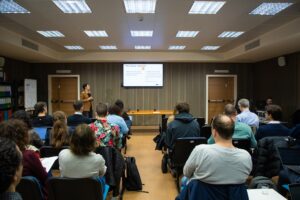
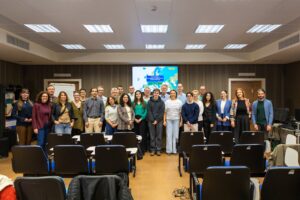
On 5 March 2026, RECONSTRUCT joined fellow CircHub projects at a joint workshop on Sustainable & Energy-Efficient Building Materials in Naples, Italy.
Held on the occasion of World Energy Efficiency Day and hosted by CNR Institute for Agricultural and Forest Systems in the Mediterranean, the event brought together five Horizon Europe projects BIOBUILD, CIRC-BOOST, RECONSTRUCT, ATRIUM and DRASTIC alongside policymakers, researchers and industry stakeholders, to exchange knowledge and explore pathways towards a more circular built environment.
A shared challenge for the construction sector
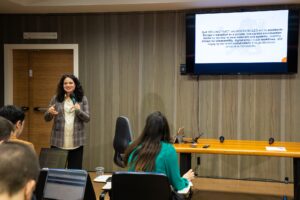
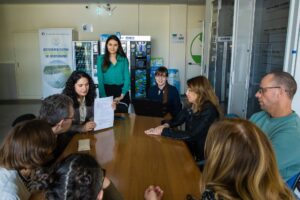
The workshop opened with a clear message: the construction sector remains one of the most resource-intensive industries in Europe, responsible for 42% of energy consumption, 35% of greenhouse gas emissions and over 35% of total waste, as pointed out by keynote speaker, Keti Medarova-Bergstrom, from the European Commission’s Research Executive Agency (REA). In this context, projects like RECONSTRUCT play a crucial role in developing and demonstrating solutions that can support the transition to circular, low-emission construction. The projects contributed to showcasing innovative approaches ranging from bio-based materials to digital tools and circular construction strategies. The discussions highlighted not only the diversity of solutions being developed, but also the importance of collaboration between projects to maximise impact. Participants engaged in an interactive World Café session designed to encourage open exchange across key themes.
From innovation to real-world uptake
A central theme emerging from the workshop was the gap between innovation and market adoption. While many promising materials and technologies already exist—including bio-based binders such as mycelium, lignin and plant oils—their uptake remains limited. Participants agreed that one of the key barriers is the lack of reliable, large-scale performance data. Without robust evidence, it is difficult for industry stakeholders to trust and adopt new materials. At the same time, regulatory frameworks, certification schemes and market expectations are not always aligned with these innovations, further slowing their deployment.
For RECONSTRUCT, this reinforces the importance of not only developing circular solutions, but also generating the performance and lifecycle impact data needed to support their uptake in real construction projects, through the contribution to EU policy definition.
Bridging research and industry
Another key takeaway was the need to strengthen the connection between research and industry. Despite significant progress, knowledge about innovative materials and circular approaches often remains fragmented and insufficiently communicated. Designers, contractors and other practitioners are not always aware of available solutions or lack the practical guidance needed to implement them. Improving knowledge transfer and collaboration between research projects, industry actors and policymakers was therefore identified as a priority.
Designing for circularity
The discussions also emphasised that circularity must be embedded from the earliest stages of the construction process. Approaches such as design for disassembly, modular construction and material reuse offer strong potential, but require a shift towards lifecycle thinking. Considering long-term environmental and economic benefits—rather than focusing solely on upfront costs—is essential to unlocking the full value of circular construction. This aligns closely with RECONSTRUCT’s approach, which integrates circular principles into design, material selection and construction processes.
Enabling the transition
Beyond technical innovation, participants identified several structural barriers that need to be addressed to scale up circular construction. These include the lack of harmonised materials data, limited standardisation frameworks and procurement practices that still favour linear models. To overcome these challenges, a number of solutions were discussed, such as the development of EU material passports, common data platforms, policy incentives and circular procurement frameworks. Strengthening these enablers will be key to creating a more supportive ecosystem for innovation.
Looking ahead
The workshop highlighted the value of collaboration across projects and sectors. By bringing together different perspectives, it created a space to identify shared challenges and align on common solutions.
For RECONSTRUCT, participating in this exchange reinforced the importance of connecting innovation, data, policy and market needs. The transition to a circular and energy-efficient built environment is already underway—but accelerating it will require stronger links between research and real-world application.
We look forward to continuing this journey together with our partners and contributing to a more sustainable future for the construction sector.
→ Watch the highlights video